Recall training in a private field
Off-lead practice without the risk. How a fenced acre turns recall from a gamble into a routine.
What is in this guide
Recall is the skill that unlocks everything else. A dog who comes back when called gets more freedom, more exercise and more adventure, and their human gets to stop doing the car park sprint of shame. The catch is that recall is hard to practise honestly. Practise in the living room and your dog aces a test that never mattered. Practise in a busy park and you are rehearsing failure with an audience.
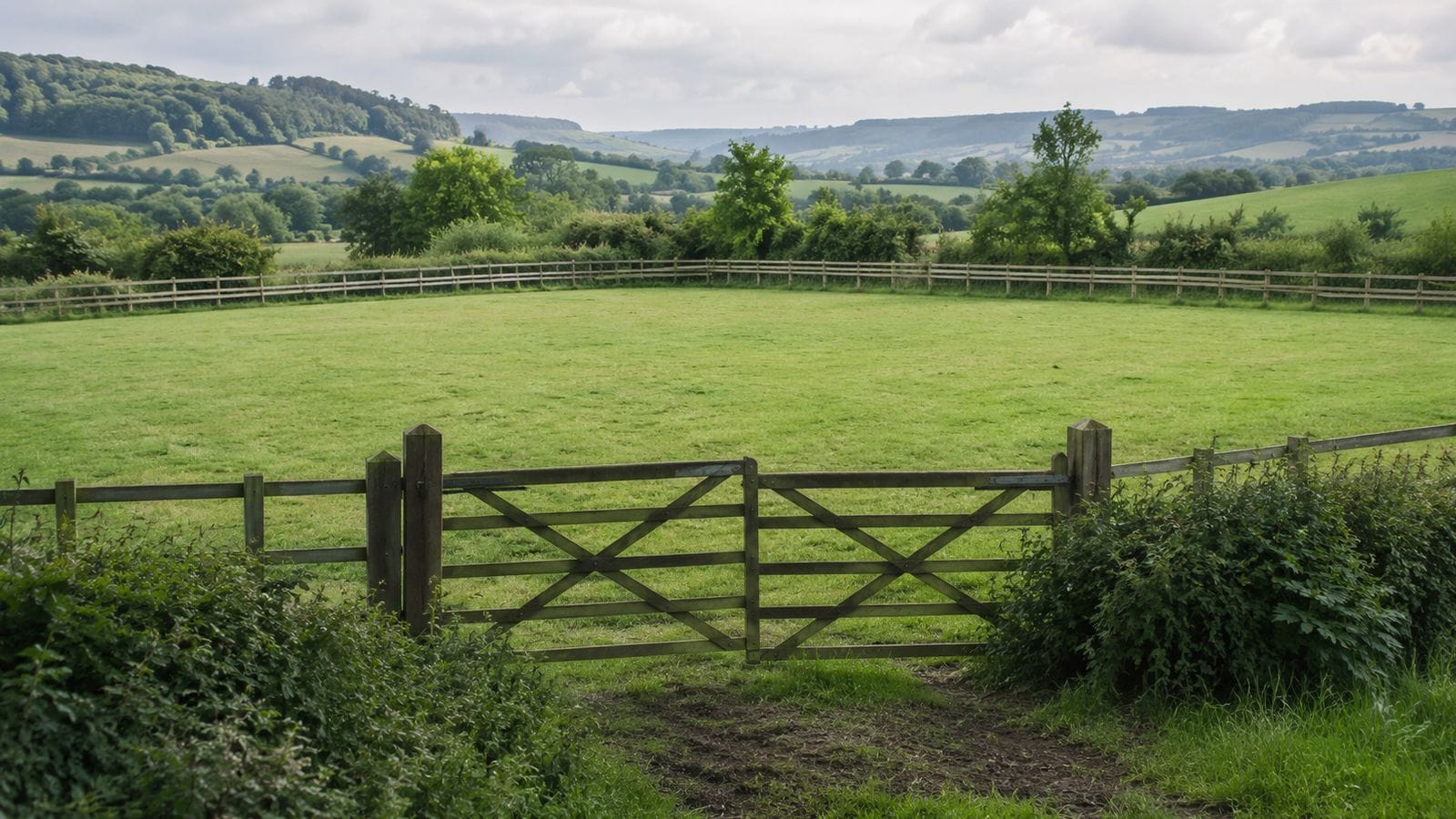
A private, secure field sits exactly in the useful middle: enough space and smell to be genuinely interesting, with a fence that means a blown recall costs you nothing but pride. Here is how to use that hour well.
The one rule that matters
Whatever method you follow, recall training lives or dies on a single principle: coming back must always be worth it. Every time your dog returns to you, something good should happen. A top-tier treat, a game with their favourite toy, warm praise, and then, crucially, often being released to go off and be a dog again.
The fastest way to ruin a recall is to only call your dog when the fun is ending. If "come" always means the lead goes on and the field trip is over, your dog will do the maths quickly. In a private field you have the luxury of calling, rewarding and releasing over and over, so the word stays valuable.
A simple session plan
Start stupidly easy
Let your dog settle into the field first: ten minutes of sniffing and exploring takes the novelty out of the air. Then start with recalls you cannot lose. Short distance, no distractions, your dog already half-looking at you. Call once, in a bright, happy voice, reward generously, release. Stack up wins.
Add distance before difficulty
When easy recalls are landing every time, stretch the distance. Call your dog from across the field while nothing else is going on. Reward arrivals like they have won a small lottery. If your dog hesitates, do not repeat the cue into the void: make yourself interesting instead. Crouch, clap, jog away from them. Being chased is a game; being ignored is a lesson you do not want to teach.
Then add distraction, gently
Difficulty in recall is mostly about competition: what are you asking your dog to leave? In a private field you control the menu. Call them away from a fascinating hedge, then from mid-sniff, then mid-zoomies. Work up gradually. A dropped toy is easier than a thrown one; a settled field is easier than one with pigeons landing in it.
Finish before they do
Ten good recalls beat thirty stale ones. Keep sessions short, end on a success, and let the rest of the hour just be a romp. The play is not wasted time: a dog who has had a proper run is a dog who associates you, and the field, with the best parts of their week.
Common mistakes, kindly flagged
- Poisoning the cue. If "come" has been shouted crossly across parks for years, consider starting fresh with a new word or a whistle, and guard its meaning from day one.
- Paying in bargain treats. Leaving a rabbit-scented hedge is premium work and deserves premium wages. Save the very best rewards for recall.
- Only ever calling once per visit. One recall at the end of the hour teaches your dog that the word ends the fun. Call, reward, release, many times.
- Rushing the graduation. A perfect recall in an empty field does not automatically survive contact with a park full of spaniels. Build up through quiet public spaces on a long line, and keep topping up the practice back in the field.
If your dog struggles with more than distraction, for example if other dogs or people trigger big reactions, work with a qualified trainer or behaviourist on a plan, and use the field as your safe practice space within it. Our guide for reactive dogs covers choosing a field with that in mind.
Games that do the work for you
Formal recalls are only one way to pay into the account. Games build the same habit while feeling like pure fun, and a private field gives you the space to play them properly:
- Ping pong. Two people stand well apart and take turns calling the dog, rewarding every arrival. Brilliant for households who share walking duties.
- Hide and seek. Wait until your dog is mid-sniff, step behind a tree, then call once. Being found becomes the best part of the game, and your dog learns that keeping half an eye on you pays.
- Catch me. Call your dog and run away as they turn. Chasing you in is faster and far more fun than trotting in, and speed is a habit worth building early.
Why the same field helps
Booking the same field each week does more than simplify logistics. A familiar space is less distracting, which keeps your training in the sweet spot: interesting enough to matter, calm enough to succeed. Owners who make it a standing fixture often find the routine is half the value. If that sounds like you, the Rompo Pass was built for exactly this kind of regular, purposeful visit.
Find a practice pitch near you: browse fields in Hampshire, Essex, Surrey and Kent, or search from the home page. First time booking? Read our guide to your first secure field visit before you go.
Recall is not a trick, it is a relationship with a paycheque. A private field is where you make the payments without the world interfering. Book the hour, bring the good treats, and enjoy watching that head whip round when you call.
Read next
Your first secure field visit
What happens when you book, what to bring, and how to make the hour worth it.
Secure fields for reactive dogs
Why a private field changes the walk for a dog who cannot cope with meeting others, and how to make the first visits count.
Helping a nervous dog build confidence
Patience, predictability and safe spaces. How confidence grows, and where a private field fits in.