Secure fields for reactive dogs
Why a private field changes the walk for a dog who cannot cope with meeting others, and how to make the first visits count.
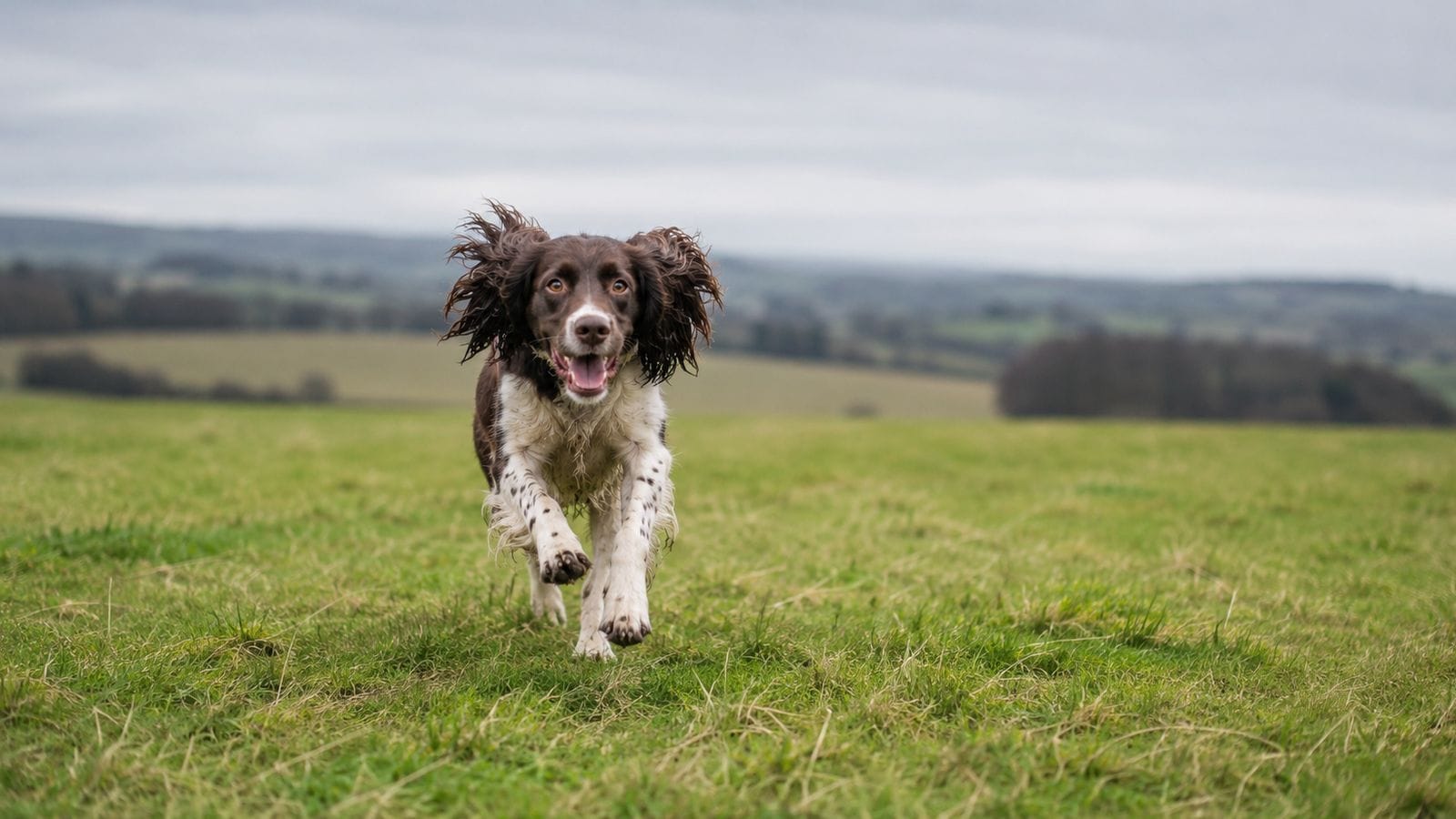
What is in this guide
If you share your life with a reactive dog, you already know the routine. The scan of the horizon before you get out of the car. The sharp turn down a side path when another dog appears. The walks timed for dawn or dusk, when the world is quieter. It is tiring, and it can make something that should be a joy feel like a military operation.
First, a word about the word. Reactive is a broad label that owners use for all sorts of behaviour: barking and lunging at other dogs, freezing at traffic, panicking at joggers, or simply finding the world a bit much. Whatever it looks like in your dog, the common thread is that certain triggers push them over a threshold where they cannot settle, listen or enjoy themselves. None of that makes them a bad dog, and it does not make you a bad owner.
Why a private field changes the maths
Most of the stress in walking a reactive dog comes from unpredictability. You cannot control who is around the next corner of a public park, whether their dog is on a lead, or whether its owner will announce that he is friendly while he barrels towards you. Every walk is a set of dice rolls.
A private, secure field removes the dice. For your booked slot the entire space belongs to you and your dog. No strange dogs, no surprise cyclists, nothing unexpected coming over the hedge. That means:
- Your dog can actually switch off. With nothing to scan for, many dogs visibly relax within a few visits: sniffing, rolling, pottering about, doing ordinary dog things at their own pace.
- You can switch off too. Your tension travels down the lead. An hour where you are not braced for the next encounter is good for both ends of it.
- Off-lead time becomes possible. Plenty of reactive dogs never get to run free because the risk is too high in public. Inside a secure fence, they can.
- Training has room to work. Whatever plan you are following with your trainer or behaviourist, a calm, controlled space gives you somewhere to practise without the world interrupting. A field is a helpful tool alongside professional advice, not a replacement for it.
How to choose a field for a reactive dog
Not every field suits every dog. Here is what to weigh up when you are browsing listings.
Fencing first
Check the fence height and type on the listing before you book. On Rompo, every field shows this up front. If your dog is a jumper or a climber, look for taller fencing and read the description for notes on gaps or low points. If anything is unclear, walk the fence line when you arrive, before the lead comes off. It takes five minutes and buys you a whole hour of peace of mind.
Entrances matter
A double-gated entrance, where you pass through one gate into a small holding pen before the second gate opens into the field, is a lovely feature for reactive dogs. It means you can sort leads, bags and an excited dog without the risk of a bolt through an open gate.
What can your dog see?
Some dogs are fine once other dogs are out of reach; others react to the sight of a dog three fields away. Descriptions and photos will tell you whether a field is open to view or screened by hedges and trees. If visual triggers are your dog's thing, favour enclosed, sheltered fields and quieter time slots.
Think about arrival
The walk from car to gate is often the hardest part. Fields with parking right beside the entrance keep that gauntlet short. Booking back-to-back with a stranger's slot can mean meeting their dog at the gate, so if that worries you, choose fields that leave gaps between bookings or pick unpopular hours.
Making the first visits count
Keep the first session simple. Let your dog explore on a long line if you are not ready for full freedom, and resist the urge to fill the hour with training. The first win is your dog learning that this place is safe and predictable. Repeat visits to the same field help: familiarity is a big part of what makes the space work. If your dog would rather sniff one hedge for forty minutes than run, that is a perfectly good hour.
When you are ready to build on that calm, our guide to recall training in a private field is a natural next step, and your first secure field visit covers the practical checklist.
A word on guilt
Plenty of owners quietly feel that hiring a field is admitting defeat, as if a proper dog owner would have a dog who copes with the park. Let that one go. Choosing an environment where your dog can succeed is not avoidance, it is good management, and it is often the first step in a longer plan. Many people find that regular, pressure-free field time lowers the overall temperature: a dog who gets to be fully off duty for a few hours a week often finds the rest of the week a little easier too. And even if field visits simply stay your dog's happy place forever, that is a perfectly good outcome. Not every dog has to love the park, and not every walk has to be training.
It helps some owners to think of the cost the way they would think of any other essential: a field slot usually costs less than a bag of decent coffee, and it buys the one thing reactive dogs rarely get, which is complete predictability.
Finding a field near you
Rompo lists private, secure fields across the UK, with fencing shown on every listing and every booking giving you exclusive use. Browse fields in Surrey, Kent, Hampshire and Essex, or search from the home page. If field time becomes a regular part of your dog's week, the Rompo Pass keeps it to one payment a month, with cover when plans change.
A reactive dog is still a dog who deserves to run, sniff and be ridiculous. Sometimes all they need is a little room of their own.
Read next
Helping a nervous dog build confidence
Patience, predictability and safe spaces. How confidence grows, and where a private field fits in.
Your first secure field visit
What happens when you book, what to bring, and how to make the hour worth it.
Recall training in a private field
Off-lead practice without the risk. How a fenced acre turns recall from a gamble into a routine.